

Arc Mainnet Officially Goes Live

Circle's Arc Network launches its public mainnet on September 16, 2026, positioning itself as the Economic OS for the internet with USDC gas fees, sub-second finality, EVM compatibility, and a founding validator cohort that includes BlackRock, Visa, and Mastercard.
(Advertisement)

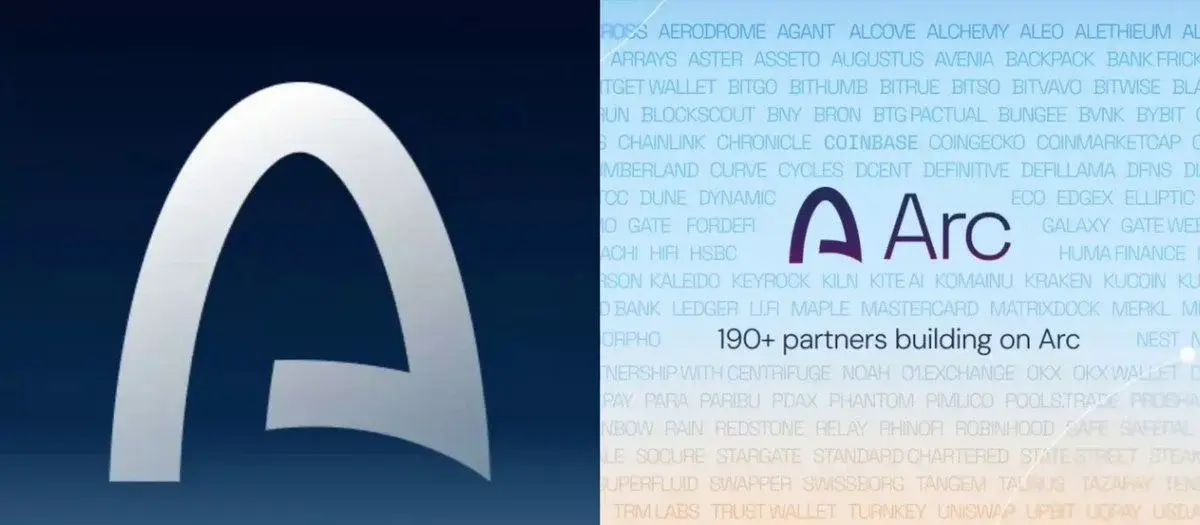
@Arc Network has officially opened its public mainnet on September 16, 2026, marking a significant milestone for Circle's ambition to build dedicated financial infrastructure on-chain. The network positions itself as the "Economic OS" for the internet, a base-layer designed for real-time value exchange, stablecoin payments, and what Circle calls agentic economic activity, where autonomous systems and AI agents transact directly on-chain.
Built for Institutions, Open to Developers
Arc is an open Layer 1 blockchain launched by Arc Network Services LLC and operated by a permissioned validator set. That validator set carries considerable weight. The founding cohort includes BlackRock, DTCC, Galaxy, Global Payments, ICE, Mastercard, MoneyGram, SBI Group, Standard Chartered, Sumitomo Corporation, and Visa, alongside Circle itself. The lineup represents an unusually institutional starting point for a public Layer 1 launch.
Arc is an open, EVM-compatible Layer 1 blockchain developed by Circle and purpose-built for stablecoin finance. It is not a Layer 2 solution built on top of Ethereum, nor a fork of an existing chain. Arc is a standalone network with its own consensus mechanism, execution environment, and fee model, designed from the ground up for financial applications.
Under the hood, Arc runs two separate clients that work together in every node: the consensus layer, built on Malachite (a Tendermint BFT implementation), orders transactions and finalizes blocks, while the execution layer, built on Reth (a Rust Ethereum execution client), executes those transactions and maintains state. This separation lets each layer be optimized independently while the network delivers sub-second deterministic finality and full EVM compatibility.
USDC as Gas and a Broad Ecosystem Stack
The most distinctive feature of Arc is that USDC serves as the native gas token. Every transaction fee is paid in USDC, not in a volatile native token, meaning costs are predictable, dollar-denominated, and a single USDC balance covers both transfer value and transaction fees. For institutions and developers already operating in stablecoin terms, this removes a common source of friction and unpredictability.
The network connects to a wide ecosystem of tooling and services, including Arc Studio, App Kits, Arc Portal, Circle Agent Stack, CCTP, Gateway, CPN, and StableFX. Arc is integrated directly into Circle's full-stack platform, including USDC, CCTP, Gateway, institutional on/offramps, and a full suite of developer services, reducing integration friction and accelerating time to market.
This launch marks the next milestone for Arc as the Economic OS for the internet: an open platform purpose-built for financial markets, real-time money movement, and agentic economic activity. Arc had been operating in private mainnet with more than 100 ecosystem and institutional builders before opening to the public.
The ARC token serves as a separate coordination asset for governance, security, and network operations, distinct from USDC which handles day-to-day gas and fees. The $222 million ARC token presale, disclosed in May 2026, was led by a16z crypto and backed by BlackRock, Apollo Funds, Intercontinental Exchange, ARK Invest, Standard Chartered Ventures, SBI Group, and others.
Sources:
Arc Blog: Arc Mainnet Launches September 16, 2026
Circle Press Release: Founding Validator Cohort and Major Integrations for Arc
GitHub: circlefin/arc-node (open-source repository)
(Advertisement)
Latest News




Read More...




Author
 UC Hope
UC holds a bachelor’s degree in Physics and has been a crypto researcher since 2020. UC was a professional writer before entering the cryptocurrency industry, but was drawn to blockchain technology by its high potential. UC has written for the likes of Cryptopolitan, as well as BSCN. He has a wide area of expertise, covering centralized and decentralized finance, as well as altcoins.