Sponsored
Paid press release. BSCN does not endorse this content.
(Advertisement)


The Next Battleground for Perp DEXs: Why User Experience Is Becoming a Key Differentiator

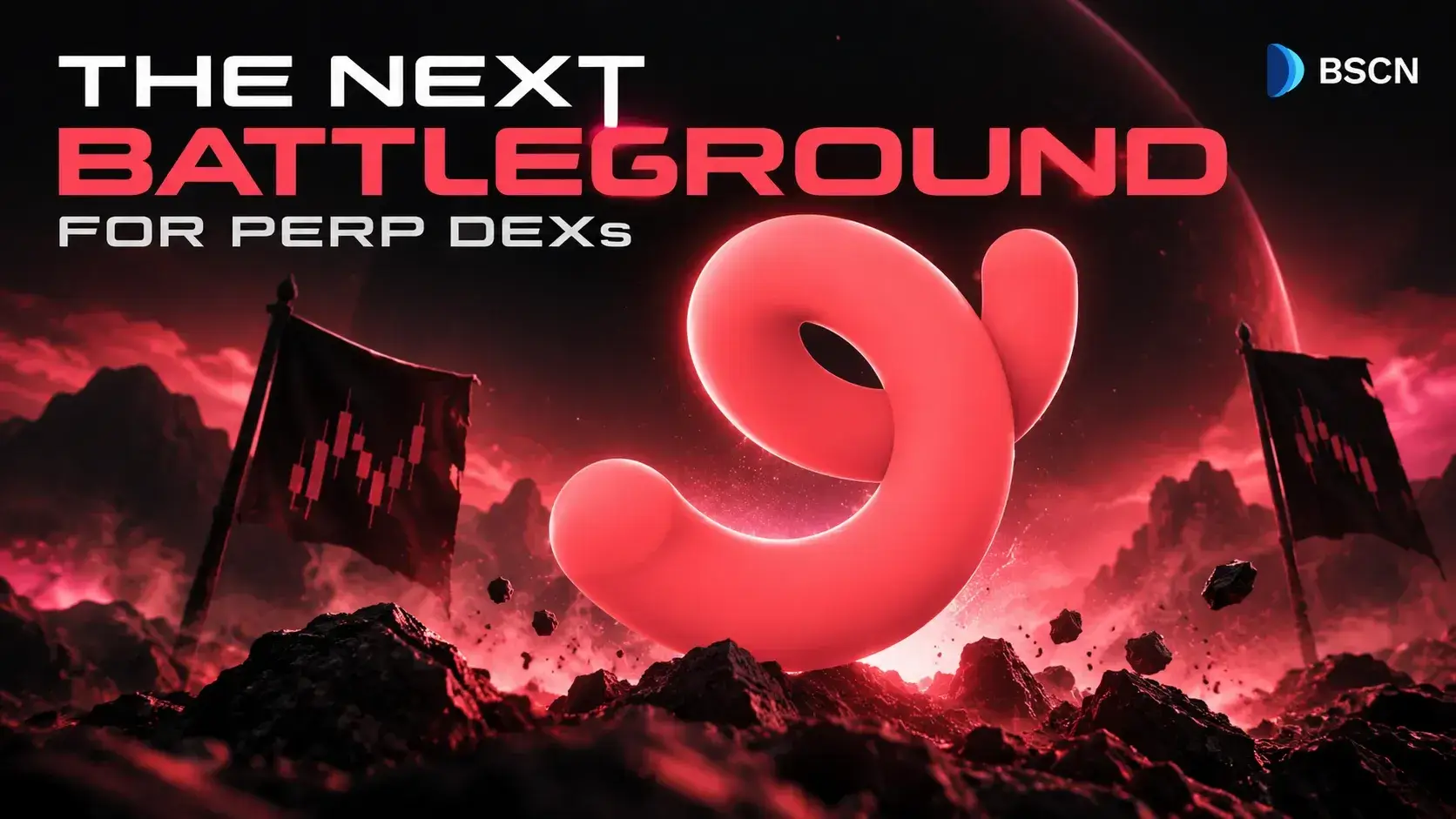
Perpetual DEX competition is shifting from liquidity to user experience as Hyperliquid's builder-code system opens the same execution layer to multiple frontends.

BSCN
September 4, 2026
(Advertisement)
Crypto trading is entering a new phase as demand for self-custody grows and real-world assets (RWAs) move on-chain. Centralized exchanges still dominate trading volume, but the 2022 FTX collapse exposed the risks of relying on intermediaries to hold user funds, strengthening interest in non-custodial alternatives.
Decentralized exchanges address the custody issue by allowing users to retain control of their assets, but they have historically introduced a different set of challenges. Wallet creation, seed-phrase management, network bridging and other Web3-specific processes can make on-chain trading difficult for users accustomed to traditional financial platforms.
Hyperliquid's architecture is changing that dynamic. Its builder-code system allows third-party interfaces to connect to the protocol's underlying order-book infrastructure, creating an environment where multiple frontends can access the same underlying liquidity and execution layer. Roughly 40% of Hyperliquid's daily active users already trade through external interfaces. As access to the underlying market becomes more standardized, the frontend itself becomes a more important point of differentiation.
The question is increasingly simple: how quickly can a new user move from discovering a perpetual DEX to actually placing a trade?
Existing frontends have largely been designed for crypto-native traders. OHAYO Global, launched on Hyperliquid, takes a different approach by targeting users coming from traditional equities who may have little experience with crypto wallets.
A Google sign-in creates an account and a self-custodial wallet simultaneously, removing the need for a separate wallet application or manual seed-phrase management. Users retain control of their wallet, while OHAYO Global does not hold their private keys.
The platform offers 24/7 perpetual trading across crypto, U.S. equities such as Apple and NVIDIA, and commodities, with leverage of up to 50x. The broader approach reflects a growing effort within on-chain trading to make decentralized markets more accessible without requiring users to adopt an entirely new trading workflow.
“Collapsing that friction into a single, accessible wallet is what we are building toward,” an OHAYO Global spokesperson said.
As the underlying execution layer becomes increasingly accessible through multiple interfaces, onboarding and usability are becoming more important factors in the competition among perpetual DEXs.
About OHAYO Global
OHAYO Global is a non-custodial perpetual futures trading platform built on Hyperliquid infrastructure. It offers 24/7 access to crypto, U.S. and Korean equities, indices, commodities, FX and pre-IPO markets through a single self-custodial wallet, with users retaining control of their assets and private keys.
Discover Promising Projects...
Promising Projects...
(Advertisement)
Read Next...
Disclaimer
Author
 BSCN
BSCNBSCN's dedicated writing team brings over 41 years of combined experience in cryptocurrency research and analysis. Our writers hold diverse academic qualifications spanning Physics, Mathematics, and Philosophy from leading institutions including Oxford and Cambridge. While united by their passion for cryptocurrency and blockchain technology, the team's professional backgrounds are equally diverse, including former venture capital investors, startup founders, and active traders.
(Advertisement)
Latest News
8h : 20m ago

How is Ondo Finance’s USDY Different From a Stablecoin?
12h : 5m ago

What Does The GENIUS Act Actually Require Under US Crypto Policy?
September 3, 2026

What Is Pons Token (PONS)? Inside Robinhood Chain's Launchpad Economy
September 3, 2026

No Roadmap, No Utility, No Problem: How Does Pepe (PEPE) Derive Value Without a Product?
September 2, 2026

Understanding Pi’s Lockup Periods and Their Impact on Circulating Supply
September 2, 2026

Inside MIP-12: How Did Monad Cut Its Block Time to 300ms?
September 1, 2026

What Is Artificial Inu ($AI)? The Memecoin Paired With Tokenized Nvidia Stock
September 1, 2026

How Does Bonk’s Letsbonk.fun Work?
(Advertisement)

Crypto Project & Token Reviews
Project & Token Reviews
Comprehensive reviews of crypto's most interesting projects and assets
Learn about the hottest projects and tokens

Latest Crypto Articles
Get up to date with the latest crypto news stories and events