

Iran Turns to Crypto as Sanctions Tighten Further

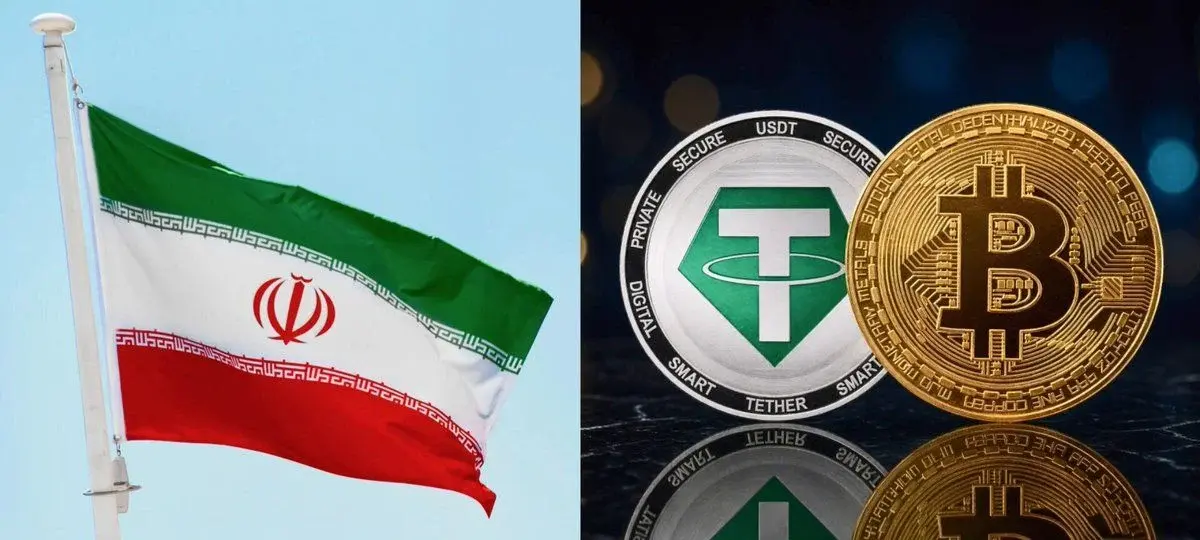
Iran's central bank has eased currency controls to let exporters settle cross-border payments using Bitcoin and Tether's USDT, as US sanctions and enforcement actions intensify.
(Advertisement)

Iran's central bank has reportedly eased foreign currency controls to encourage businesses to bring overseas earnings home, including through cryptocurrency, amid tightening US sanctions. This includes using Tether's USDt ($USDT) and $BTC to settle cross-border transactions through Iranian cryptocurrency exchanges, according to the Financial Times.
Under the new arrangement, exporters can fund imports with overseas earnings without first selling their foreign currency at official government rates. USDT is reportedly the most commonly used cryptocurrency for Iranian cross-border commercial payments.
A Widening Crack in Sanctions Enforcement
The shift comes as US authorities have intensified pressure on Iran's financial networks. Operation Economic Fury, the Treasury Department's sanctions campaign targeting Iran's crypto-based financial infrastructure, had resulted in cumulative seizures of approximately $1 billion in Iranian crypto assets as of late May 2026. The campaign sanctioned four Iranian crypto exchanges in early June 2026 and has included a freeze of over $130 million on wallets linked directly to Iran's central bank.
Separately, Tether froze $344 million in USDT linked to sanctioned Iranian wallets during an April 2026 enforcement action. Blockchain intelligence firm TRM Labs attributed approximately $9.9 billion in cryptocurrency volume to Iran during 2025, down from roughly $11.4 billion recorded in 2024.
The CoinEx Connection
TRM Labs said CoinEx served as a gateway for the crypto sector in Iran, having traced more than $3.84 billion in flows between the exchange and sanctioned Iranian entities over the last seven years. TRM Labs said CoinEx became the single biggest trading partner of Iran's largest crypto exchange, Nobitex, which accounted for around $2.7 billion of those flows.
CoinEx denied having any commercial relationship with Iranian exchanges or government entities, saying it has begun exiting Iran-related business. The exchange further stated that it was blacklisted by the Iranian government in 2021 and has never established an operating entity in the country.
The broader picture points to a structural shift in how sanctioned economies interact with global financial markets. TRM said the sustained volume of Iranian crypto activity reflected structural demand rather than purely speculative trading. With Tehran now formally tolerating crypto for trade settlement, the gap between sanctions policy and enforcement on-chain appears to be growing.
Sources:
Cointelegraph: Iran Eases Currency Controls as Traders Use Crypto
The Block: CoinEx processed $3.8 billion in Iran-linked funds, TRM Labs
Crypto.news: Iran turns to crypto for export payments amid sanctions
(Advertisement)
Latest News





Read More...





Author
 Soumen Datta
Soumen has been a crypto researcher since 2020 and holds a master’s in Physics. His writing and research has been published by publications such as CryptoSlate and DailyCoin, as well as BSCN. His areas of focus include Bitcoin, DeFi, and high-potential altcoins like Ethereum, Solana, XRP, and Chainlink. He combines analytical depth with journalistic clarity to deliver insights for both newcomers and seasoned crypto readers.