Deepdive
(Advertisement)


Who Is Dfinity Founder Dominic Williams, and What's He Trying to Prove With ICP?

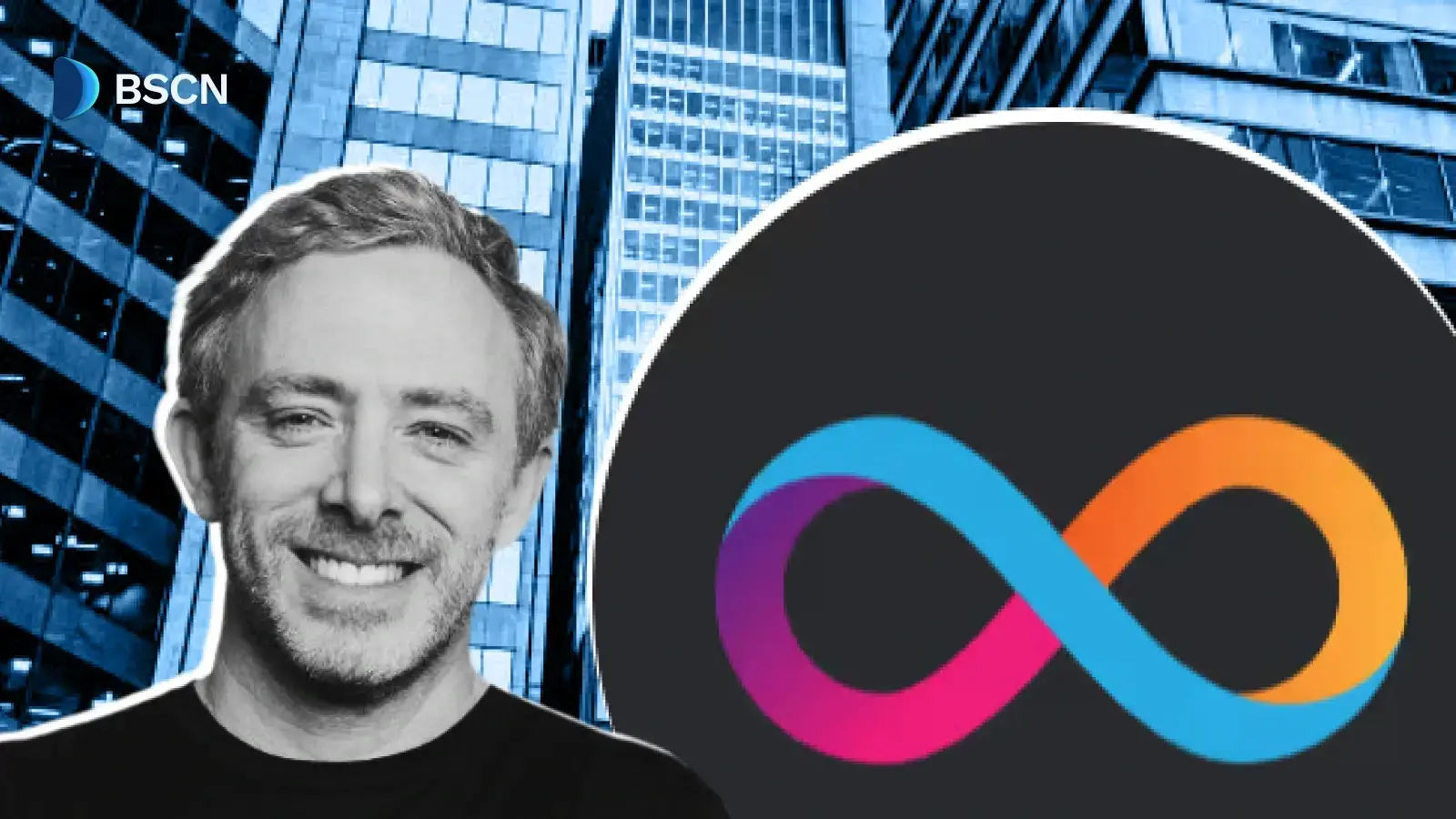
Dominic Williams founded DFINITY to build the Internet Computer. Here's his background, ICP's technology, and where the token stands today.

Soumen Datta
September 16, 2026

(Advertisement)
Table of Contents
Dominic Williams is a British computer scientist and entrepreneur who founded the DFINITY Foundation and serves as its President and Chief Scientist, building the Internet Computer Protocol (ICP) to prove that blockchains can replace traditional cloud servers rather than just process payments.
His goal is what he calls the "World Computer," a network where websites, apps, and backend systems run entirely on-chain instead of on servers owned by companies like Amazon or Google.
Who Is Dominic Williams?
Williams graduated with a first-class honors degree in Computer Science from King's College London, where he also won the Sambrooke Exhibition prize for academic performance. Before moving into crypto full time in 2013, he built and sold earlier ventures, including System7, a web portal platform sold to Ordovic in 2011, and Fight My Monster, a children's MMO game that reached millions of users.
His interest in cryptography traces back to 1998, when he used Wei Dai's crypto++ software library, whose documentation referenced Dai's b-money proposal, an early precursor to Bitcoin's design. In 2015, Williams coined the name DFINITY, short for "decentralized infinity," and founded the DFINITY Foundation in Zurich, Switzerland, in 2016.
Technical Contributions
Williams is credited with several original protocol designs used in ICP's architecture:
- Threshold Relay, a randomness and consensus mechanism
- Probabilistic Slot Consensus (PSC) chains
- Validation Towers and Trees, a data-availability structure
- USCIDs, a canister identification system
- The "3 E's of Sybil Resistance," a framework for network security against fake identities
How Does the Internet Computer Actually Work?
ICP's mainnet launched in May 2021, and the token briefly entered the top ten cryptocurrencies by market capitalization before falling more than 95% within weeks. The underlying technology, however, is built around three core mechanisms rather than the token's early price action.
Core Architecture
- Subnets: Independent groups of typically 13 to 40 node machines that each run their own consensus process, host canisters, and execute applications in parallel, allowing the network to scale horizontally by adding more subnets
- Canisters: ICP's version of smart contracts, which bundle code and data together as WebAssembly modules and can serve web content directly to a browser without separate server infrastructure
- Chain-key cryptography: A threshold signature system that lets the entire network present a single public key, since no individual node holds a complete private key, enabling fast verification and native interaction with external chains like Bitcoin
- Reverse gas model: Developers, not end users, pay for computation by converting ICP tokens into "cycles," which fund a canister's processing, storage, and bandwidth
Governance runs through the Network Nervous System (NNS), an on-chain DAO where ICP holders lock tokens into "neurons" to vote on protocol upgrades, which take effect automatically without requiring a manual hard fork.
As of September 14, 2026, ICP traded near $2.5, with a market capitalization of roughly $1.4 billion, an RSI of 57.6 indicating moderate momentum without being overbought, and a 30-day return of about 23.4%. The token remains roughly 99.57% below its all-time high of $638.58, set on May 11, 2021, shortly after launch.
Conclusion
Dominic Williams built DFINITY around a specific technical bet: that canisters, chain-key cryptography, and a reverse gas model can let applications run entirely on-chain while still feeling as fast and free as a normal website. The Internet Computer delivers sub-second to low-second finality, subnet-based horizontal scaling, and gasless end-user interactions today, even as its token trades far below its 2021 peak.
Resources
- Report by CoinStats: Internet Computer (ICP) Fundamental Analysis September 2026
- Report by KuCoin: How Does Internet Computer (ICP) Work
- Report by The Coinomist: Dominic Williams, DFINITY, and the Internet That Writes Itself
- Report by DiarioBitcoin: Internet Computer (ICP) Consolida Ganancias del 21% Mensual Pese a Retroceso Diario
- Crunchbase Profile: Dominic Williams, Founder, President and Chief Scientist at DFINITY
Read Next...
Frequently Asked Questions
Disclaimer
Disclaimer: The views expressed in this article do not necessarily represent the views of BSCN. The information provided in this article is for educational and entertainment purposes only and should not be construed as investment advice, or advice of any kind. BSCN assumes no responsibility for any investment decisions made based on the information provided in this article. If you believe that the article should be amended, please reach out to the BSCN team by emailing info@bsc.news.
Author
 Soumen Datta
Soumen has been a crypto researcher since 2020 and holds a master’s in Physics. His writing and research has been published by publications such as CryptoSlate and DailyCoin, as well as BSCN. His areas of focus include Bitcoin, DeFi, and high-potential altcoins like Ethereum, Solana, XRP, and Chainlink. He combines analytical depth with journalistic clarity to deliver insights for both newcomers and seasoned crypto readers.
(Advertisement)
Latest News
4h : 25m ago

CLARITY Act Fails, What Happens Now?
September 16, 2026

How Did a “Dogecoin Killer” Become a Multi-Billion-Dollar Coin Without a Real Plan?
September 16, 2026

Who Is Dfinity Founder Dominic Williams, and What's He Trying to Prove With ICP?
September 15, 2026

Who Are the Key Players Behind the CLARITY Act?
September 15, 2026

How Does Avalanche’s Snowman Consensus Deliver Sub Second Finality?
September 14, 2026

Why Could Monad's November 2026 Token Unlock Be Its Biggest Test Yet?
September 14, 2026

CLARITY Act vs. MiCA: Comparing Two Crypto Regulatory Philosophies
September 11, 2026

Inside Kaspa's Toccata Hard Fork and Its Bet on Becoming a Smart Contract Platform
(Advertisement)

Crypto Project & Token Reviews
Project & Token Reviews
Comprehensive reviews of crypto's most interesting projects and assets
Learn about the hottest projects and tokens

Latest Crypto Articles
Get up to date with the latest crypto news stories and events