

Dogecoin ended its halvings in 2015 and the block reward never drops again

Dogecoin fixed its block reward at 10,000 DOGE per block in 2015, ending all future halvings. Here is what that means for the coin's supply and inflation model.
(Advertisement)

Most proof-of-work cryptocurrencies are built around a predictable schedule of reward reductions. Bitcoin halves its block reward roughly every four years. Dogecoin took a different path, and the divergence became permanent in 2015.
How the Early Reward System Worked
@dogecoin launched in late 2013 with a reward structure unlike anything else in the market at the time. Block rewards were not fixed. Instead, they were drawn at random within a range, a design that introduced an element of chance into the mining process. That system was later changed at block 145,000, after mining pools identified and began targeting only the blocks carrying the highest potential payouts, undermining the intended randomness.
Alongside the random reward design, halvings happened every 100,000 blocks, or approximately every 69 days, until 2015. That is a far faster compression schedule than Bitcoin's four-year cycle, and it meant Dogecoin's issuance was falling quickly in its first year.
A Permanent Reward, an Uncapped Supply
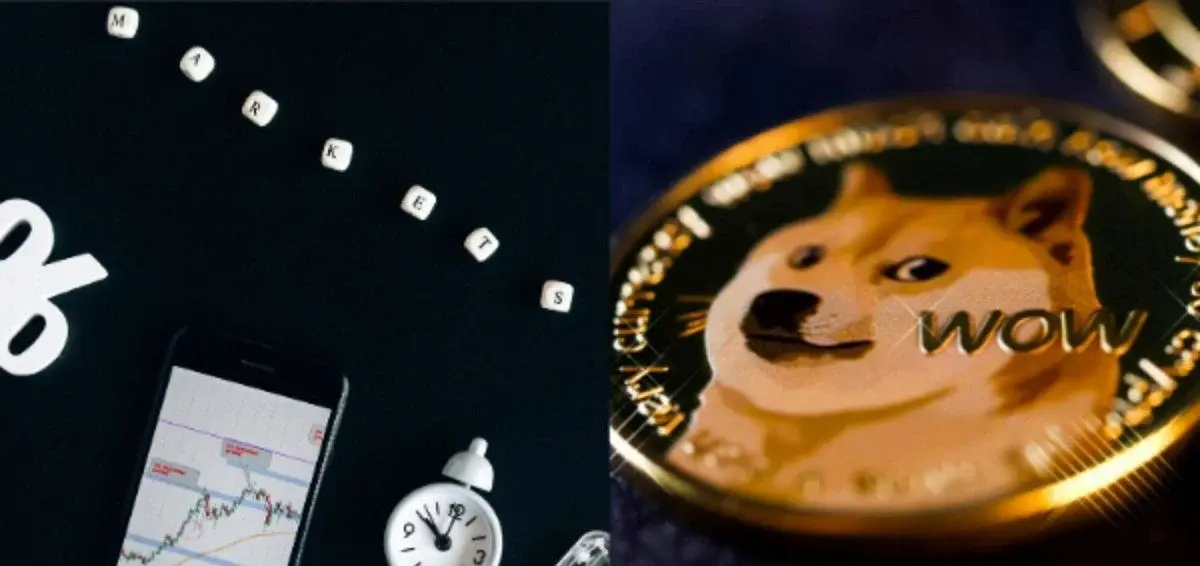
Starting with the 600,000th block, a permanent reward of 10,000 Dogecoin per block was established. That block arrived in 2015, and the halvings stopped entirely. Dogecoin produces a new block roughly every minute, one of the fastest schedules of any major proof-of-work coin. Each block pays a fixed 10,000 $DOGE, a figure that has stayed constant since 2015. Because there is no halving, that reward never shrinks, giving miners a predictable and stable income for securing the chain.
At one block per minute, that works out to roughly 14.4 million new $DOGE entering circulation every day, and around 5 billion DOGE added to supply per year. There is no cap on total supply. Unlike Bitcoin, Dogecoin is uncapped, meaning it has an infinite supply and will never halve rewards again.
Some users questioned how Dogecoin could achieve high value with an infinite supply. The community's view was that natural coin losses would be offset by the constant supply, allowing DOGE to function more like a spending currency than a deflationary store of value. That makes it mildly inflationary, with the percentage rate shrinking each year as the total supply grows.
Each subsequent block grants 10,000 coins to encourage miners to continue to secure the network and to make up for lost wallets and coins. The design is intentional: prioritise network stability and miner participation over scarcity.
Sources:
Dogecoin Official FAQ (GitHub)
What Is Dogecoin Mining in 2026? (MillionMiner)
ELI5 Dogecoin Halvings (Crypto.bi)
(Advertisement)
Latest News


Read More...



Author
 Crypto Rich
Rich has been researching cryptocurrency and blockchain technology for eight years and has served as a senior analyst at BSCN since its founding in 2020. He focuses on fundamental analysis of early-stage crypto projects and tokens and has published in-depth research reports on over 200 emerging protocols. Rich also writes about broader technology and scientific trends and maintains active involvement in the crypto community through X/Twitter Spaces, and leading industry events.