

Ethereum Sets 2029 Target For Quantum Resistant L1

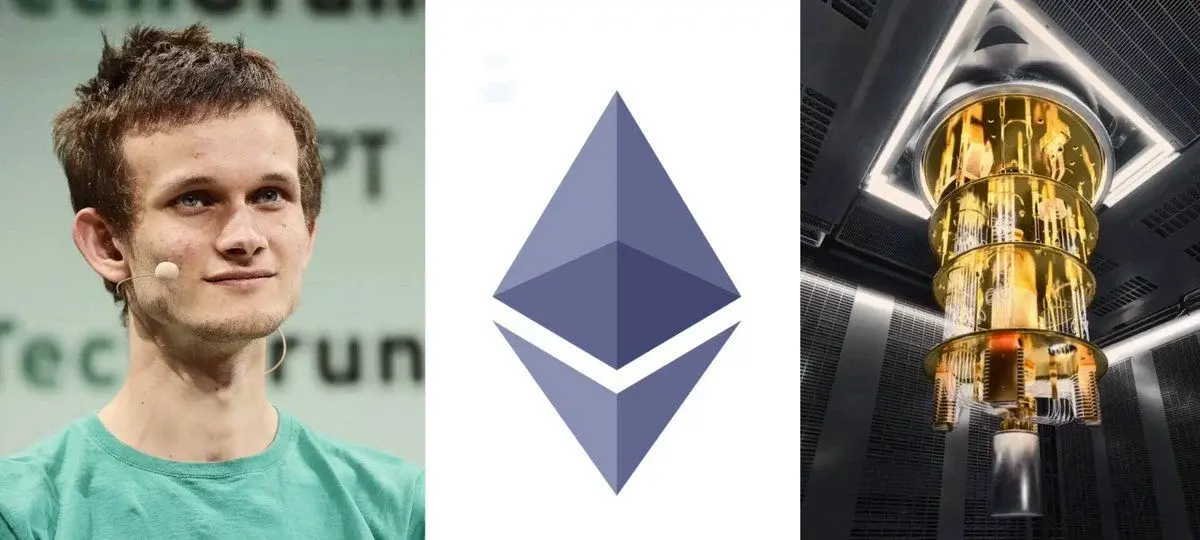
The Ethereum Foundation's Protocol Cluster has set December 2029 as its deadline for a fully quantum-resistant Layer 1, spanning execution, consensus, and data layers, with five major research arcs guiding the path forward.
(Advertisement)

December 2029: Ethereum's Quantum-Resistance Deadline
The Ethereum Foundation's Protocol Cluster has named quantum resistance its defining research priority, setting December 2029 as the deadline for making Ethereum's Layer 1 fully resistant to quantum attacks. The target spans all three core layers of the protocol: execution, consensus, and data.
Fredrik Svantes, who leads protocol coordination at the Ethereum Foundation, said the cluster is "aggressively targeting" a quantum-resistant L1 no later than December 2029. He noted that the commitment directly affects which proposals teams recommend for the upcoming Hegotá upgrade and how they assess other protocol work.
Hegotá is not the post-quantum fork itself, but rather the fork that determines whether later post-quantum upgrades stay on schedule. To meet its December 2029 deadline, the Protocol Cluster plans to execute five hard forks after Hegotá, with an average cadence of 7.2 months per fork. Key milestones include the introduction of leanSPHINCS cryptographic schemes, post-quantum attestations, and a decentralized public-key registry.
The Foundation is planning around the possibility of "Q-day" arriving as early as 2030, describing the assumption as deliberately aggressive, with the target scheduled for reassessment in January 2027 with input from external experts.
Five Research Arcs and the Hegotá Tier List
Post-quantum readiness is one of five multi-fork research arcs for the protocol, the others being fast finality, privacy, state, and zkEVM. The fast-finality work aims to reduce Ethereum's finality time from minutes to seconds. The state research arc will focus on Ethereum's growing state requirements, including a planned trie migration and improvements to decentralised access to current and historical state.
Alongside the longer-term priorities, the Protocol Cluster also published its first unified tier list for a single network upgrade. It is the cluster's first shared tier list covering a single network upgrade, with around 60 researchers, engineers, and specialists from nine teams submitting 397 individual ratings. The list grades 62 proposed Ethereum Improvement Proposals (EIPs) for Hegotá, with EIP-7805 (FOCIL) and EIP-8141 (Frame Transactions) receiving the highest S-tier classification. Another 15 proposals were placed in the A tier, described as "expected to ship," while 28 proposals were rejected.
No part of this work is finished, and all timelines are estimates that may shift. Even so, the publication of a structured, cross-team tier list signals a more coordinated approach to Ethereum's protocol development than in previous upgrade cycles.
Sources:
Ethereum targets quantum-resistant L1 by 2029 (Crypto.news)
Ethereum Targets 2029 for Post-Quantum L1 Readiness (The Crypto Times)
A more secure Ethereum (ethereum.org)
(Advertisement)
Latest News



Read More...


Author
 Soumen Datta
Soumen has been a crypto researcher since 2020 and holds a master’s in Physics. His writing and research has been published by publications such as CryptoSlate and DailyCoin, as well as BSCN. His areas of focus include Bitcoin, DeFi, and high-potential altcoins like Ethereum, Solana, XRP, and Chainlink. He combines analytical depth with journalistic clarity to deliver insights for both newcomers and seasoned crypto readers.