

SUI is Becoming Quantum Ready

Sui Network is integrating two NIST-approved post-quantum signature schemes, ML-DSA-65 and SLH-DSA-SHA2-128s, to protect user accounts and smart contract vaults against quantum threats without requiring asset transfers.

(Advertisement)

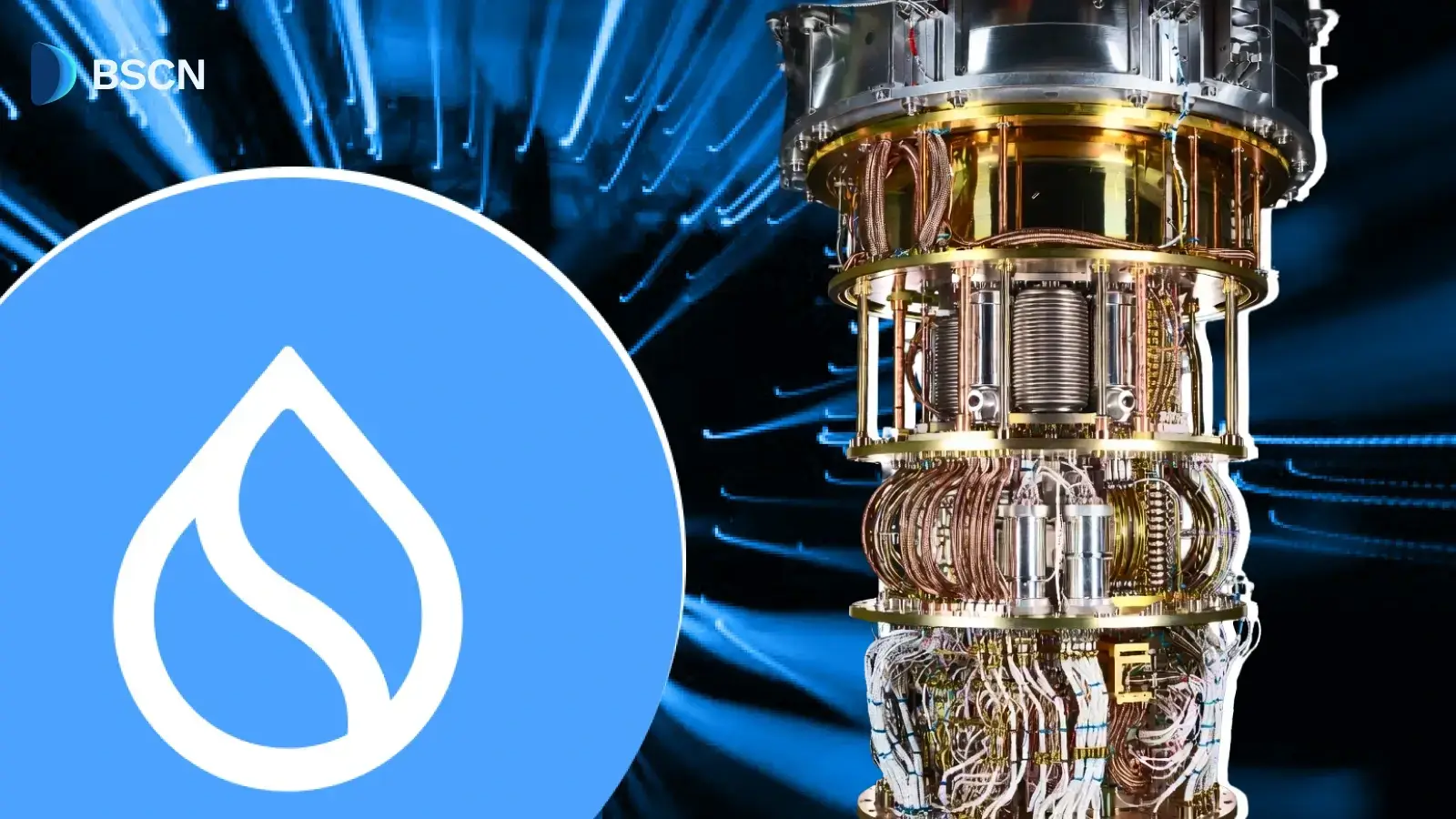
@SuiNetwork is moving to harden its cryptographic foundation against quantum threats, integrating two signature schemes formally approved by the United States National Institute of Standards and Technology (NIST). The decision places Sui among the first major layer-1 networks to adopt post-quantum protections at the protocol level.
Two Algorithms, Two Use Cases
The architecture assigns each algorithm a distinct role. For everyday transactions, ML-DSA-65 becomes a native protocol signature scheme, covering standard user accounts. Smart contract vaults, which hold assets under programmable conditions, will be secured using SLH-DSA-SHA2-128s.
The two standards are technically distinct. ML-DSA (FIPS 204) is intended as the primary standard for protecting digital signatures and uses the CRYSTALS-Dilithium algorithm, built on lattice-based mathematics. SLH-DSA (FIPS 205), also designed for digital signatures, employs the Sphincs+ algorithm and is based on a different mathematical approach, intended as a backup method in case ML-DSA proves vulnerable. NIST expects that the two digital signature standards, ML-DSA and SLH-DSA, will provide the foundation for most deployments of post-quantum cryptography.
Sui opted for Level 3 security parameters rather than the lower-cost Level 1 option. The choice followed a July 2026 incident where an AI model halved the effective key strength of HAWK, a post-quantum signature candidate, in about 60 hours, after two years of expert human review had cleared it. The episode underscored that candidates not yet stress-tested by AI-assisted cryptanalysis carry meaningful residual risk.
No Asset Migration Required
The rollout is designed to minimize disruption for $SUI holders. The upgrade mechanism uses address aliases and deterministic seeds, allowing users to move to quantum-safe keys without transferring existing holdings or changing their public addresses. This approach removes one of the most significant barriers to adoption of new cryptographic standards in live networks, where forcing on-chain asset migration typically creates friction and security risk during the transition window.
NIST released the principal three post-quantum cryptography standards in 2024 following a multi-year international competition involving industry, academia, and governments, and organizations are encouraged to begin applying these standards now to migrate their systems to quantum-resistant cryptography.
Sources:
Investing.com: Sui Adopts Post-Quantum Signature Schemes
NIST: First 3 Finalized Post-Quantum Encryption Standards
NIST CSRC: Post-Quantum Cryptography Project
(Advertisement)
Latest News



Read More...


Author
 UC Hope
UC holds a bachelor’s degree in Physics and has been a crypto researcher since 2020. UC was a professional writer before entering the cryptocurrency industry, but was drawn to blockchain technology by its high potential. UC has written for the likes of Cryptopolitan, as well as BSCN. He has a wide area of expertise, covering centralized and decentralized finance, as well as altcoins.