Deepdive
(Advertisement)


Why is Zcash a Favorite Among Crypto’s Original Cypherpunk Crowd?

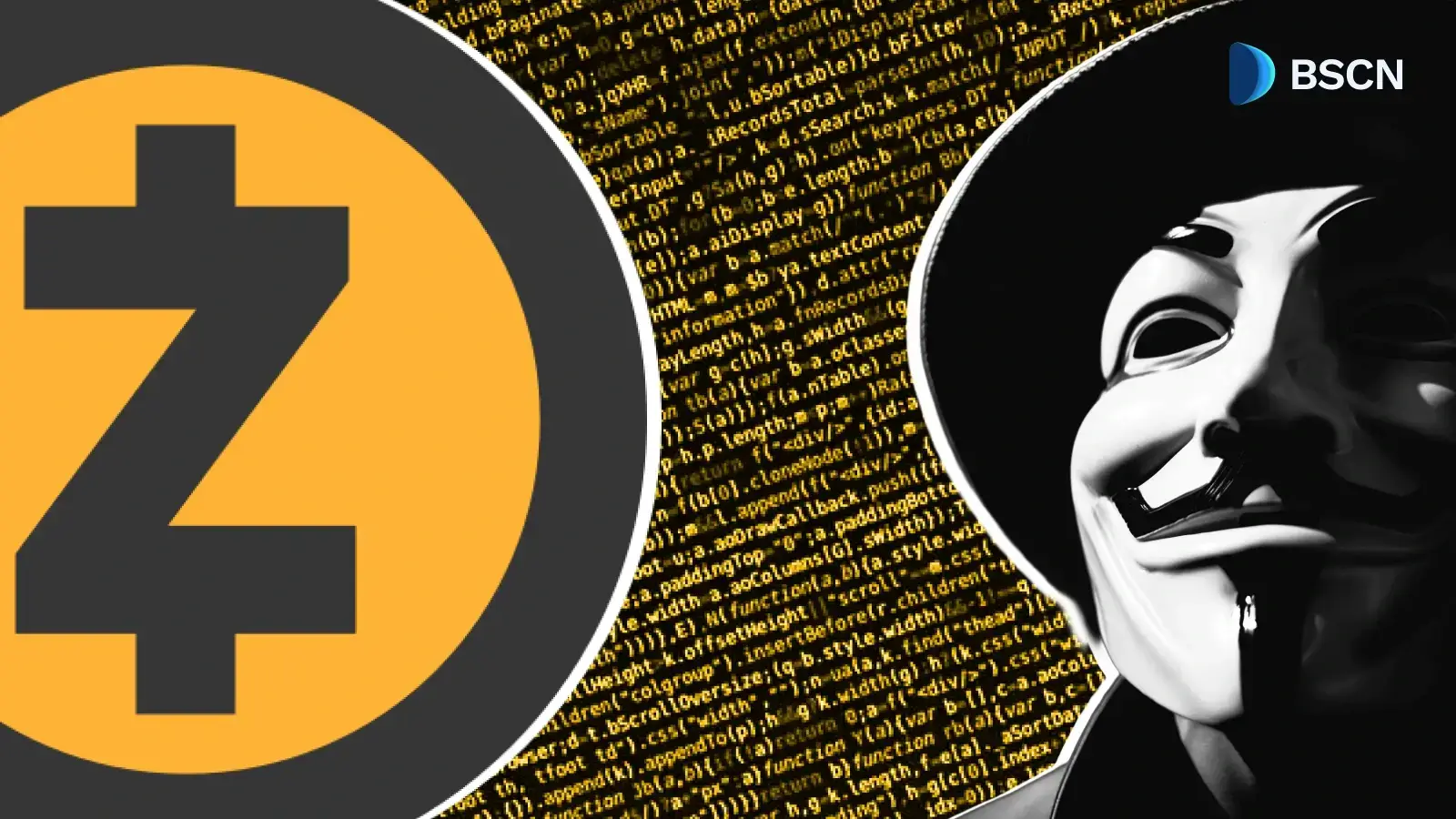
Zcash draws cypherpunk loyalty through zk-SNARK privacy, founder Zooko Wilcox's roots in the movement, and a 2026 rally past $1,400.

Soumen Datta
September 18, 2026

(Advertisement)
Table of Contents
Zcash holds a special place among crypto's original cypherpunks because it was built by people from that exact community to solve the exact problem they cared about most: private digital money.
The coin's zero-knowledge cryptography, its founder's direct ties to the 1990s cypherpunk mailing list, and its refusal to treat privacy as optional marketing have made it a rare project that still earns respect from the people who wrote crypto's founding philosophy.
What Is the Cypherpunk Movement, and Why Does It Matter to Zcash?
The cypherpunk movement began in the late 1980s and early 1990s as a loose group of cryptographers, programmers, and privacy advocates who believed that strong encryption was the only way to protect individual freedom in a digital world. They organized through an email list known as the Cypherpunk Mailing List, where members like Tim May, author of the Crypto Anarchist Manifesto, and Wei Dai, creator of the early digital cash concept b-money, debated how to build money that governments and corporations could not track. Their motto, "cypherpunks write code," reflected a belief that privacy tools had to be built, not just discussed.
Zcash traces directly back to this circle. Its founder, Zooko Wilcox-O'Hearn, discovered the cypherpunk mailing lists after the internet went mainstream in the early 1990s and began using the pseudonym "Zooko" while joining online discussions with Tim May and Wei Dai. He later worked at DigiCash, one of the first digital money projects, where he tackled the problem of anonymous electronic cash and how to stop banks and payers from teaming up to expose a user's identity. This early struggle to build genuinely private payments became the foundation for what he eventually built with Zcash.
How Does Zcash's Technology Reflects Cypherpunk Values?
Zcash launched on October 28, 2016, as a fork of Bitcoin's codebase. It kept several Bitcoin-like features, including a UTXO transaction model, a fixed maximum supply of 21 million coins, mining-based security, and periodic halvings. What sets it apart is its privacy layer, built on zero-knowledge cryptography.
Zcash's defining feature is zk-SNARKs, short for zero-knowledge succinct non-interactive arguments of knowledge. These proofs let the network confirm a transaction is valid without revealing the sender, recipient, amount, or memo when shielded addresses are used. This matters to cypherpunks because it solves the core problem they debated decades earlier: proving something is true without exposing the private details behind it.
The system works through a few key parts:
- Transparent addresses, which historically begin with the letter t and publicly show balances and transaction history, similar to Bitcoin.
- Shielded pools, including the Sapling and Orchard systems, which encrypt transaction details while still letting the network verify nothing was faked.
- Viewing keys, which allow a user to selectively reveal transaction data to an auditor or business partner without handing over spending control.
Privacy on Zcash is optional rather than mandatory, unlike Monero, which shields every transaction by default. This design gives exchanges, custodians, and regulated businesses more flexibility, but it also means the network's actual privacy strength depends on how many people choose to use shielded addresses rather than transparent ones.
Recent Upgrades Cypherpunks Are Watching
Zcash migrated to a new shielded pool called Ironwood on July 28, 2026, marking one of its largest privacy upgrades to date. The community then held a governance vote on Network Upgrade 7, or NU7, which closed on September 14. Results published that week showed strong turnout, about 2.4 million ZEC, or roughly 66% of eligible coins, took part.
Voters backed cutting block time from 75 seconds to 25 seconds with 99.9% support, chose to keep the existing Bitcoin-style halving schedule with 98.9% support, and voted with 96.6% support to wait until February 2031 before reissuing ZEC collected through the network's sustainability mechanism. The voting system itself is privacy-preserving: individual balances and ballots stayed hidden while only the combined results were published. The vote sets direction but does not activate code on its own; NU7 still needs implementation, testing, and a formal activation height, which has not yet been set.
Discover Promising Projects...
Promising Projects...
(Advertisement)
Why Has Zcash Gained Ground With Privacy-Focused Investors in 2026?
Zcash has had an unusually strong year. Glassnode data showed ZEC gaining roughly 2,496% over the twelve months ending in early September 2026, helping privacy coins as a group reach about $33.6 billion in combined market capitalization. As of September 18, 2026, ZEC traded near $1,486, giving it a market capitalization of roughly $25 billion and placing it around ninth among all cryptocurrencies by that measure.
Part of the attention comes from institutional interest. Publicly traded firm Cypherpunk Technologies (Nasdaq: CYPH), backed by Gemini co-founder Tyler Winklevoss, has built a digital asset treasury centered on ZEC, framing it as what Winklevoss calls "encrypted Bitcoin."
Not everyone agrees the rally reflects the network's fundamentals. During ZEC's earlier 2025 rally, market analyst Rajat Soni publicly cautioned that the hype could be an effort to create "exit liquidity" for early holders, and other commentators have repeatedly labeled ZEC's price runs "pump and dump" schemes on social media, pointing to its long history of sharp rallies followed by steep pullbacks. This kind of open skepticism, insisting that privacy claims and price action be backed by verifiable evidence rather than promotion, is itself a very cypherpunk instinct.
Zcash's Standing Among Privacy-First Technologists
What keeps cypherpunks and privacy engineers engaged with Zcash isn't the price chart. It's that the project keeps its founding logic intact: build the tool, publish the proofs, and let anyone verify the math instead of trusting a promise.
Zooko Wilcox's own history, from the cypherpunk mailing list to DigiCash to Zcash, gives the project a lineage that few other coins can claim, and the zk-SNARK research underlying it remains one of the most cited applications of zero-knowledge proofs in a live financial system.
Conclusion
Zcash combines a technical foundation built on zk-SNARK proofs with a founding story rooted directly in the cypherpunk mailing list of the 1990s. Its shielded and transparent address system gives users a real choice between privacy and openness, its NU7 governance vote was itself conducted with privacy-preserving tools, and its 2026 market performance has drawn both institutional buyers and pointed skepticism from analysts. That mix of cryptographic substance and open debate is exactly what keeps the original cypherpunk crowd paying attention.
Resources
Report by Coinbase: Zcash founder background and live price data
Report by KuCoin: Privacy sector market cap and ZEC 12-month performance data
Report by CoinStats: Technical architecture, zk-SNARKs, shielded pools, and viewing keys
Report by Bybit: September 18, 2026 price, market cap, and supply data
Report by CoinDesk: NU7 governance vote results, published September 16, 2026
Report by Cointelegraph: Analyst skepticism, including Rajat Soni's "exit liquidity" warning
Report by The Block: Cypherpunk Technologies' ZEC treasury and Tyler Winklevoss's "encrypted Bitcoin" framing
Report by HackerNoon: Zooko Wilcox's cypherpunk mailing list history and DigiCash background
Read Next...
Frequently Asked Questions
Disclaimer
Disclaimer: The views expressed in this article do not necessarily represent the views of BSCN. The information provided in this article is for educational and entertainment purposes only and should not be construed as investment advice, or advice of any kind. BSCN assumes no responsibility for any investment decisions made based on the information provided in this article. If you believe that the article should be amended, please reach out to the BSCN team by emailing info@bsc.news.
Author
 Soumen Datta
Soumen has been a crypto researcher since 2020 and holds a master’s in Physics. His writing and research has been published by publications such as CryptoSlate and DailyCoin, as well as BSCN. His areas of focus include Bitcoin, DeFi, and high-potential altcoins like Ethereum, Solana, XRP, and Chainlink. He combines analytical depth with journalistic clarity to deliver insights for both newcomers and seasoned crypto readers.
(Advertisement)
Latest News
4h : 27m ago

Why is Zcash a Favorite Among Crypto’s Original Cypherpunk Crowd?
7h : 57m ago

Why Was Polkadot Once Called an "Ethereum Killer" and What Changed?
September 17, 2026

How Sei is Connecting Traditional Finance With Blockchain?
September 17, 2026

CLARITY Act Fails, What Happens Now?
September 16, 2026

How Did a “Dogecoin Killer” Become a Multi-Billion-Dollar Coin Without a Real Plan?
September 16, 2026

Who Is Dfinity Founder Dominic Williams, and What's He Trying to Prove With ICP?
September 15, 2026

Who Are the Key Players Behind the CLARITY Act?
September 15, 2026

How Does Avalanche’s Snowman Consensus Deliver Sub Second Finality?
(Advertisement)

Crypto Project & Token Reviews
Project & Token Reviews
Comprehensive reviews of crypto's most interesting projects and assets
Learn about the hottest projects and tokens

Latest Crypto Articles
Get up to date with the latest crypto news stories and events