

Binance's EU Expansion Collapsed After Reported Lagarde Intervention

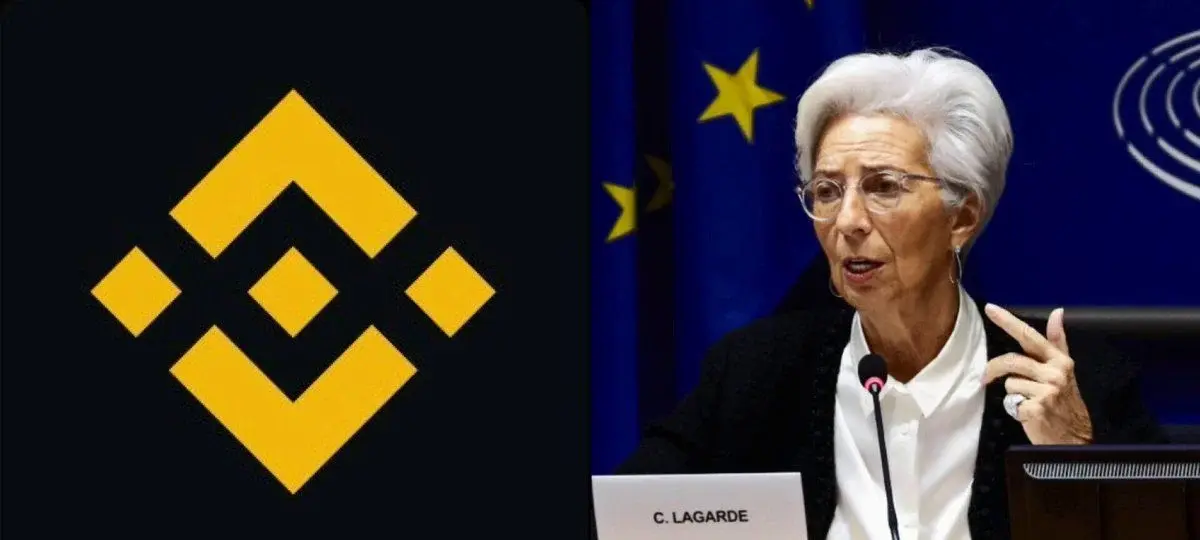
ECB President Christine Lagarde reportedly urged Greece to block Binance's MiCA license bid, citing US compliance concerns and dollar stablecoin risks, forcing the exchange to withdraw its application before a formal decision.
(Advertisement)

Binance's attempt to secure a foothold in the European Union has collapsed after ECB President Christine Lagarde reportedly intervened to block the exchange's regulatory application in Greece, according to a report by The Wall Street Journal.
A License That Was Almost Approved
Binance submitted its MiCA application to Greece's Hellenic Capital Market Commission (HCMC) earlier in 2026, establishing a local holding company to anchor its European operations. Greek authorities informed Binance in April that its application was complete, and the company had expected approval in early June. But board meetings were repeatedly delayed, ultimately prompting Binance to withdraw the filing.
ECB President Christine Lagarde personally asked Greek Prime Minister Kyriakos Mitsotakis to reject Binance's bid for an EU crypto license, The Wall Street Journal reported. Neither the ECB nor the Greek government has publicly confirmed the conversation. Under MiCA, crypto firms must secure authorization from one EU member state to passport services across all 27 countries. A successful Greek approval would therefore have opened the entire EU market to Binance in one step.
Compliance History and the Digital Euro
The Journal says Lagarde's opposition traced to Binance's earlier guilty plea to US money-laundering and sanctions violations. She reportedly saw that history as a compliance red flag. In 2023, Binance pleaded guilty in the US to Bank Secrecy Act and sanctions breaches, paid $4.3 billion, and founder Changpeng Zhao stepped down.
Lagarde's second concern centered on the ECB's own digital euro project. She reportedly feared Binance's entry would accelerate dollar stablecoin adoption in Europe, undercutting that effort. The ECB holds no formal authority over exchange licensing under MiCA. That power sits with national regulators, and approval in one member state extends across the entire bloc.
ESMA privately advised national regulators to disapprove Binance's MiCA applications, highlighting issues the exchange has meeting compliance with financial-crime rules, the Wall Street Journal reported, citing people familiar with the discussions. Binance's European head Gillian Lynch rejected the characterisation, saying the WSJ's coverage "mischaracterises how these accounts were identified, reviewed and acted upon," adding that as soon as Binance uncovered the complex patterns of activity in question, it offboarded all accounts involved and reported them to law enforcement.
Binance's attempt to secure a MiCA license through Greece's Hellenic Capital Market Commission collapsed on June 24, 2026, when the exchange confirmed it had withdrawn its application, just days before the July 1 deadline. After withdrawing the application in Greece, Binance plans to seek authorization in France, saying it remains confident it will secure an EU license in the coming months, the FT reported.
Sources:
CoinDesk: Binance pushes back on reports that EU regulators tried to block it
Euronews: Binance to halt crypto services across EU after failing to secure MiCA approval
BeInCrypto: Binance's EU Entry Personally Blocked by ECB President
(Advertisement)
Latest News



Read More...




Author
 Soumen Datta
Soumen has been a crypto researcher since 2020 and holds a master’s in Physics. His writing and research has been published by publications such as CryptoSlate and DailyCoin, as well as BSCN. His areas of focus include Bitcoin, DeFi, and high-potential altcoins like Ethereum, Solana, XRP, and Chainlink. He combines analytical depth with journalistic clarity to deliver insights for both newcomers and seasoned crypto readers.