

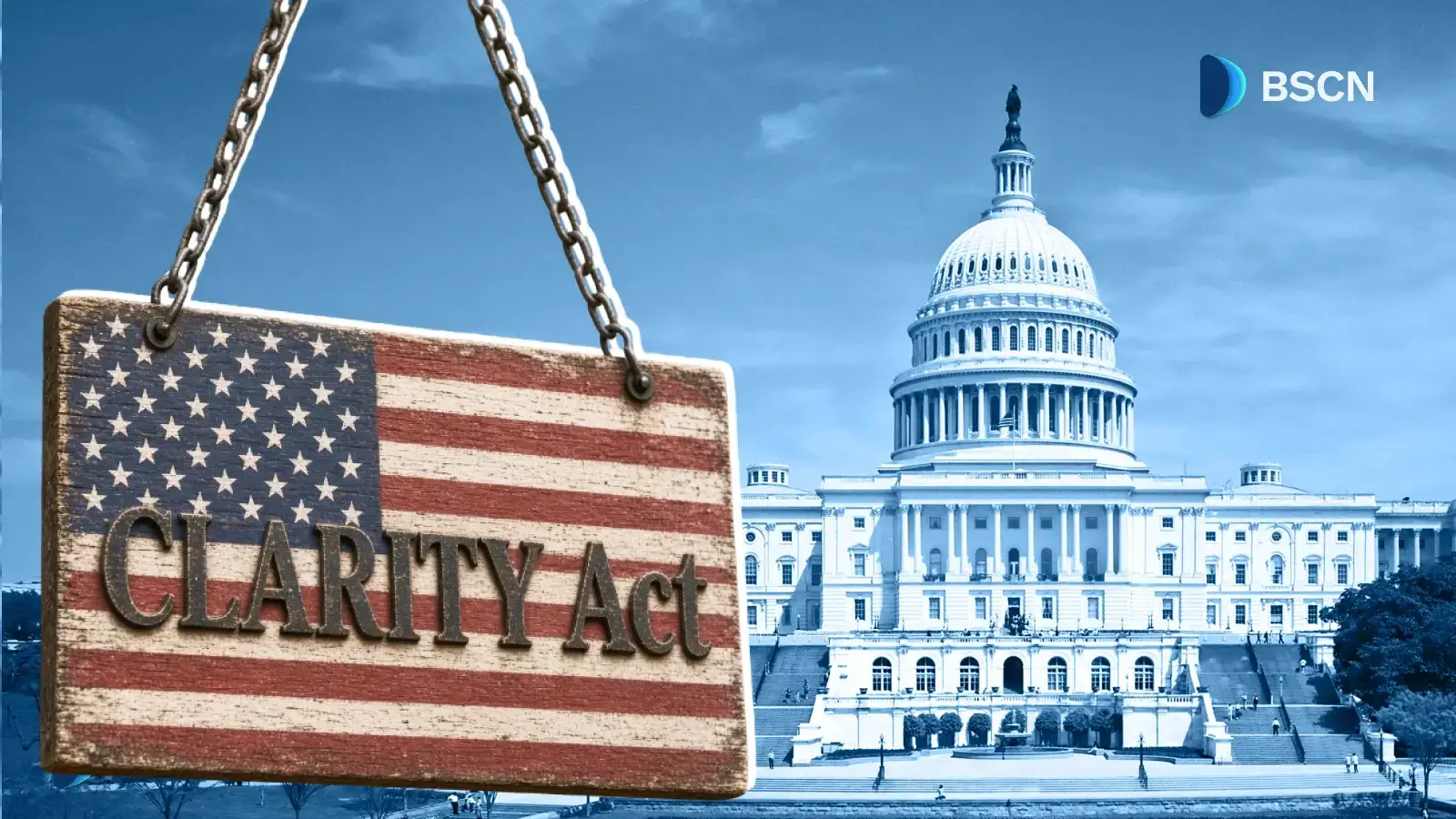
Brad Garlinghouse blames Democratic politics for the failed CLARITY Act cloture vote.

Ripple CEO Brad Garlinghouse calls the CLARITY Act cloture failure painful and points to Democratic opposition, while looking to the SEC and CFTC to fill the regulatory gap through rulemaking.

(Advertisement)

Ripple CEO @bgarlinghouse has broken his silence on the collapse of the Senate's CLARITY Act cloture vote, calling the result painful and saying a post-mortem is now necessary. In a pointed response, Garlinghouse pointed the finger squarely at Democratic opposition, invoking the phrase "anti-crypto army" to describe the bloc he holds responsible for the bill's failure.
A Narrow and Telling Defeat
The numbers told their own story. The U.S. Senate did not advance the Digital Asset Market Clarity Act on Tuesday, after over 40 senators voted against the bill. The final tally was 49 to 50. Republicans hold 53 seats in the chamber, meaning at least seven Democrats or independents were required to reach the 60-vote supermajority needed for cloture. That threshold was never reached.
The defeat came despite a late push for compromise. Over the weekend, Republicans unveiled a heavily revised version of the legislation after months of negotiations, incorporating more than 100 substantive changes sought by Democrats. Polymarket odds of the CLARITY Act becoming law in 2026 had surged from the low-20% range to roughly 35% on September 14, but that optimism proved short-lived. Senators Mark Warner and Ruben Gallego said the latest compromise still fell short.
Senator Cynthia Lummis had warned that if the cloture motion was denied, negotiations could come to a close, telling reporters, "I think we're done."
What Comes Next: Rulemaking Over Legislation
Failure at this stage would effectively end the bill for 2026 and likely until 2029, given the midterm election calendar. Former New York Governor Andrew Cuomo had previously warned that if the CLARITY Act failed before the midterms and Democrats subsequently won the House, a prolonged regulatory clash between Congress and the administration could follow.
With the legislative path now closed, Garlinghouse said he expects regulators to step in. He pointed to SEC Chair @SECPaulSAtkins and CFTC Chairman @ChairmanSelig as the figures best positioned to fill the gap through agency rulemaking. The CLARITY Act would have given the CFTC more control over crypto trading while reducing the SEC's role in secondary crypto markets. Without legislation, those jurisdictional questions remain unresolved.
The vote marks a sharp reversal for Garlinghouse, who as recently as earlier this year estimated an 80 to 90% chance the CLARITY Act would pass Congress, and who pushed back just days before the vote on the idea that the bill represented a watered-down compromise, saying it was "the product of real, substantive trades policymakers made to get here."
Sources:
CoinDesk: Clarity Act fails in Senate
CoinGape: CLARITY Act Live Updates, September 15
Crypto Times: Senate Tests CLARITY Act, September 15
(Advertisement)
Latest News





Read More...




Author
 Crypto Rich
Rich has been researching cryptocurrency and blockchain technology for eight years and has served as a senior analyst at BSCN since its founding in 2020. He focuses on fundamental analysis of early-stage crypto projects and tokens and has published in-depth research reports on over 200 emerging protocols. Rich also writes about broader technology and scientific trends and maintains active involvement in the crypto community through X/Twitter Spaces, and leading industry events.