

CLARITY Act Still Has a Narrow Path

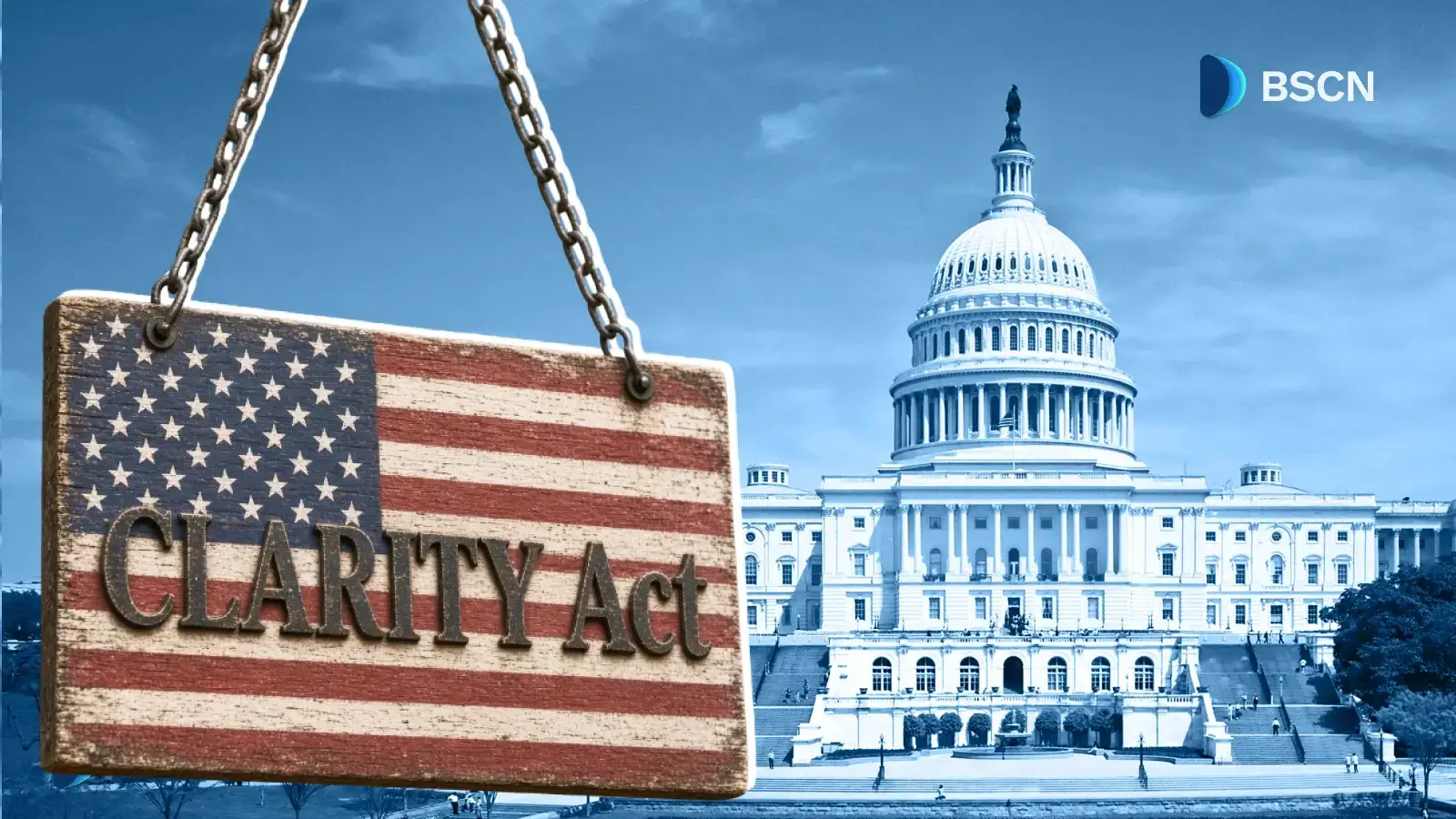
The CLARITY Act fell short in Tuesday's Senate cloture vote 49-50, but Senator Thom Tillis filed a motion to reconsider, keeping a narrow path alive for the Digital Asset Market Clarity Act before midterm elections.

(Advertisement)

The Digital Asset Market Clarity Act (CLARITY Act) hit a significant wall on Tuesday after the U.S. Senate failed to advance it through a key procedural vote. The Senate voted 49-50 against the Clarity Act, which would regulate the digital asset industry comprehensively for the first time at the federal level. The bill required 60 affirmative votes to advance but only 50 senators voted yes.
Three Republicans broke with their party to oppose the measure: Senator Susan Collins of Maine, Senator Josh Hawley of Missouri, and Senator Jerry Moran of Kansas. All Democrats voted against advancing the bill, including several who had spent months negotiating the CLARITY Act, among them Senators Gillibrand, Warner, Booker, Warnock, Gallego, Alsobrooks, and Cortez Masto. Bipartisan negotiations shut down just before the vote, with staff for Senator Tim Scott ending a final discussion on ethics provisions held in Senator Thom Tillis's office.
Tillis Motion Keeps the Bill Alive
The vote did not formally kill the legislation. Senator Thom Tillis voted "no" for procedural reasons so he could enter a motion to reconsider and preserve the option of a future vote. That move preserves the right to reconsider the bill, which allows another cloture vote within two days. In a statement following the vote, Tillis said the motion reflects "substantial bipartisan progress" made in large part because of the White House, and that "this procedural motion allows us to continue working towards a positive outcome."
Still, opinion within Republican ranks is divided. One Republican Senate aide told The Block that they think the bill is dead. The sticking point throughout negotiations has been ethics provisions governing elected officials and their families holding or profiting from digital assets while in office. Republican leaders had released a revised version of the bill on Sunday, adding new ethics restrictions to address Democratic concerns about public officials profiting from crypto ventures, but those changes were not enough to break the impasse.
Time Running Out Before Midterms
The legislative calendar is now the bill's biggest enemy. If the bill fails to advance, that likely spells the end for any crypto market structure legislation in 2026, and with Congress poised to be under split party control next year, it is unclear when the legislature may return to market structure legislation again. As the midterms near, Congress will increasingly focus its attention on elections rather than complex legislative business.
The bill's next step will depend on whether Senate leaders bring the motion back for reconsideration or reopen negotiations on a revised package. For now, the CLARITY Act remains on the Senate calendar, wounded but not formally withdrawn.
Sources:
CNBC: Senate cloture vote on Clarity Act fails, dealing regulatory blow to crypto industry
Newsweek: Crypto Clarity Act Fails in Senate, list of Republicans voting with Democrats
NPR: Crypto suffers major defeat as Senate rejects Clarity Act
(Advertisement)
Latest News





Read More...




Author
 Soumen Datta
Soumen has been a crypto researcher since 2020 and holds a master’s in Physics. His writing and research has been published by publications such as CryptoSlate and DailyCoin, as well as BSCN. His areas of focus include Bitcoin, DeFi, and high-potential altcoins like Ethereum, Solana, XRP, and Chainlink. He combines analytical depth with journalistic clarity to deliver insights for both newcomers and seasoned crypto readers.